


YAKAMA NATION
Museum & Cultural Center
.png)
.jpg)


.jpg)

ABOUT
The Yakama Nation Cultural Center Campus is a unique facility. We have the Yakama Nation Museum, Yakama Nation Cultural Center Gift Shop, Heritage Theater, Yakama Nation Library, and the iconic Winter Lodge.
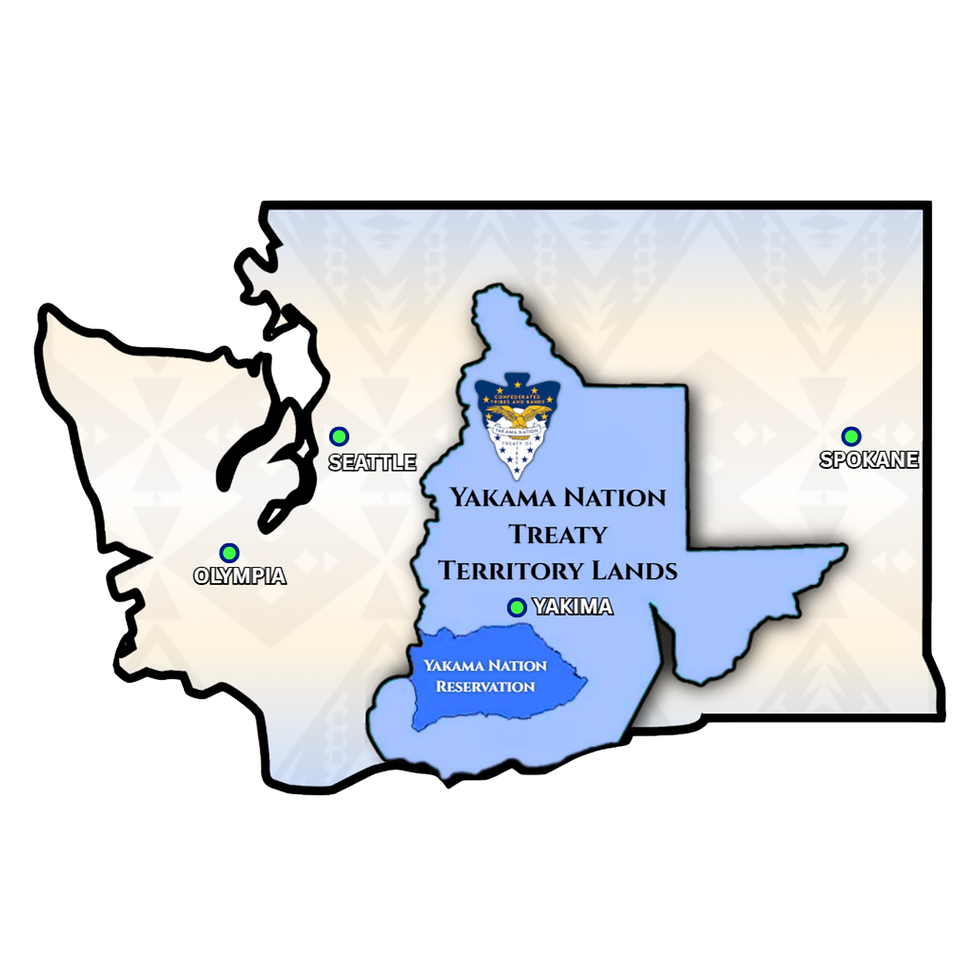
The Yakama Reservation and ceded territories consist of Mt. Adams, the Yakima River, Medicine Valley, evergreen forests, meadows, Celilo Falls, Fort Simcoe, Columbia River and beautiful rolling hills.
We have always honored and respected Mother Nature. She gives us our huckleberries, roots, choke cherries, deer and salmon. As you walk around our campus we have a wonderful view of Mt. Adams.
Yakama has a long history and our full name is the Confederated Tribes and Bands of the Yakama Nation. One of our great leaders was Kamiakin.


.png)
Cultural Center Booking & Rentals
Nchi Wana Rental Agreement
Rental Agreement for Nchi Wana. Complete & return to CHCBooking@yakama.com
Winterlodge Rental Agreement
Winterlodge rental require a deposit of $75. Complete & return to CHCBooking@yakama.com
.png)
YAKAMA HISTORY
Since time immemorial, the lands of Our People extended in all directions along the Cascade Mountain Range to the Columbia River and beyond. We consider it land given in trust by the Creator to us and a heritage to be held and protected for unborn generations.
The ancestors of today's Yakamas were of different tribes and bands. Each was a distinct group led by a council of leaders, and each tribe or band spoke their own native language, and were closely related to other Columbia Basin Plateau Tribes. The following are the names of these tribes and bands that participated in or were named as part of the YAKAMA NATION:
Palouse, Pisquose, Yakama, Wenatchapam, Klinquit, Oche Chotes, Kow way saye ee, Sk'in-pah, Kah-miltpah, Klickitat, Wish ham , See ap Cat, Li ay was and Shyiks.
At the signing of the Treaty of 1855, which took place near present day Walla Walla, Washington, 14 tribes and Bands were confederated into the Yakama Indian Nation. Leaders who signed the Treaty of 1855 were:
Kamaiakin, Sklom, Owhi, Te-cole-kun,La-hoom, Koo-lat-toose, Sch-noo-a, Me-ni-nock, Shee-ah-cotte, Sla-kish, Elit Palmer, Tuck-quille, Wish-och-knipits and Ka-loo-as.
Of the original 10.8 million acres of Yakama lands; 1.3 millions acres were set aside by the Treaty of 1855 as the Yakama Reservation. All of the remaining land was "the ceded area" to the United States Government for rights, privileges and guarantees which Yakama tribal members exercise today in tribal council.
In recognition of the original 14 Treaty signers and formally established in 1944, a tribal council of 14 leaders is elected by the General Membership Council and authorized to transact business for the Yakama Nation. The General Council is comprised of enrolled tribal members over 18 years of age who elect officials to represent the Yakama Nation. A system of utilizing the traditional form of voting by raising of the right hand during election is still practiced today. By this process, the Yakama Nation is recognized as a sovereign traditional treaty tribe.
The first formal Yakama Indian Agency was established in 1859. "After hostilities with the United States military subsided", the chosen location was the abandoned military base, Fort Simcoe, southwest of present day White Swan. This area, originally known as "Mool-mool", had been a camp site for the summer and early fall seasons at the time when people did their hunting, root gathering, fishing and huckleberry picking.
This seasonal food area on the Eel Trail was the hub of travel to the usual and accustomed fishing, hunting and gathering areas towards the Columbia River. Troops occupying the fort renamed the area "Simcoe Valley." The name is derived from the Yakama word "Sim Quwe" pronounced "Sim Ku We", which means "saddle back" or a dip between two hills like a saddle back. The Yakama people called the area Mool Mool because of the spot where the water bubbles out of the ground, making a sound similar to "Mool Mool." The agency was thereafter moved approximately 30 miles east to present day Toppenish.
NOTE: Resolution T-053-94 has recognized the new spelling of the word "YAKAMA." "Whereas, for many years the symbolic spelling of our nation has been 'YAKIMA' with all of our documents, resolutions, letterheads, and nation's flag, etc.", and "whereas, in accordance with our Treaty negotiations, the confederacy of the 14 original tribes and bands shall be know as Confederated Tribes and Band of the Yakama Indian Nation."
NOTE: Resolution T-172-99 has recognized the removal of 'Indian'. "Whereas, by motion of the Yakama Tribal Council it has been determined that...the word "Indian" shall no longer be labeled to Yakama Nation. Now, therefore, be it resolved, by the Executive Board of the Yakama Tribal Council...hereby corrects the official Government to be recognized by its official name "Confederated Tribes and Bands of the Yakama Nation."
.png)